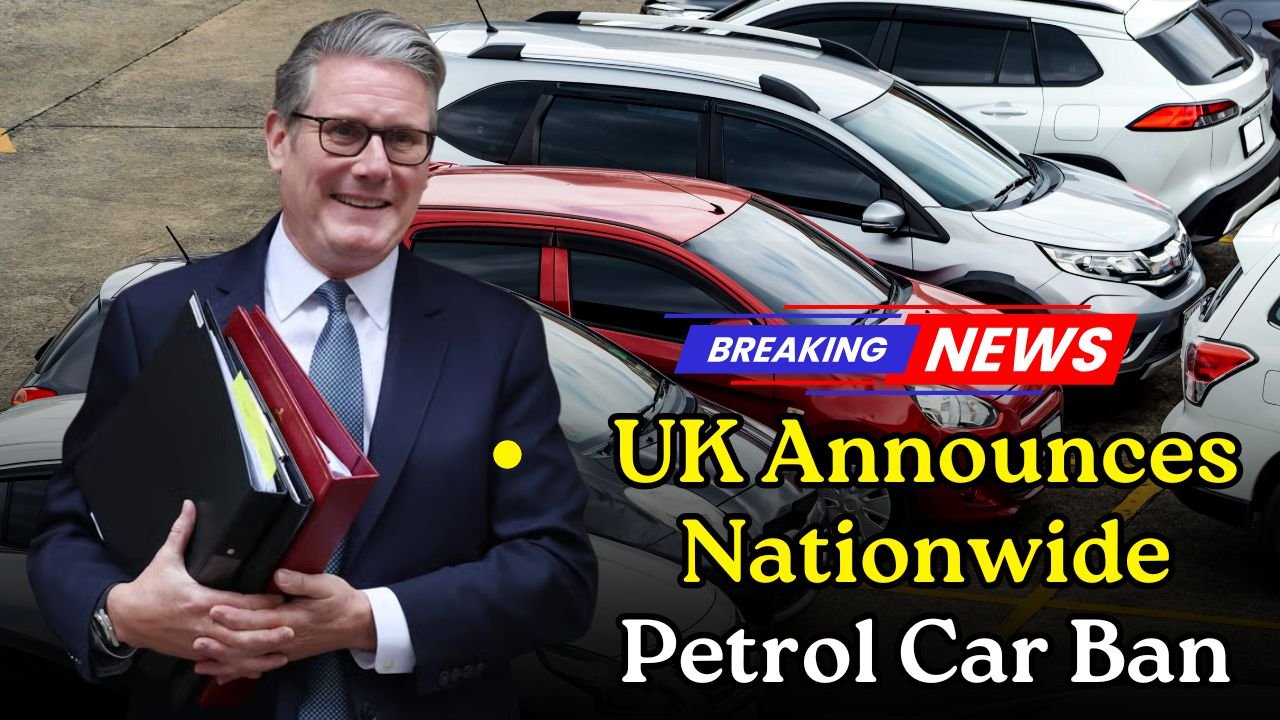
The UK petrol and diesel car ban has been a moving target over recent years, leaving many drivers confused about when they’ll need to switch to electric vehicles. With Labour’s government reinstating the 2030 deadline, it’s time to clear up the confusion and explain what this means for motorists across Britain.
What Is the Petrol Car Ban?
Starting from 2030, new vehicles with internal combustion engines, such as petrol, diesel, and LPG cars, will be banned across the UK. This doesn’t mean you’ll have to give up your current vehicle, but you won’t be able to purchase a brand new petrol or diesel car from dealerships after this date.
The policy forms part of the UK’s commitment to reach net-zero carbon emissions by 2050. The average petrol car produces 164 grams of CO2 per kilometre, while diesel cars produce 170 grams of CO2/km, making them significant contributors to Britain’s carbon footprint.
Timeline of Key Dates
Understanding the ban requires knowing multiple deadlines. Here’s a simple breakdown:
| Year | What Happens | Vehicle Types Affected |
|---|---|---|
| 2030 | Ban on new petrol and diesel cars | Pure petrol and diesel vehicles |
| 2035 | Ban on all non-zero emission vehicles | Hybrid cars (full and plug-in) |
| Ongoing | Used car sales remain legal | All existing vehicles |
The Ban’s Complicated History
The petrol car ban has experienced several shifts. Originally introduced in 2017 under Theresa May’s government with a 2040 target date, it was brought forward to 2030 during Boris Johnson’s tenure in November 2020, then delayed to 2035 by Rishi Sunak. In 2024, Keir Starmer’s Labour government restored the original 2030 target.
This back-and-forth has created uncertainty for both consumers and manufacturers, with many calling for policy stability to support the transition to electric vehicles.
What Vehicles Are Exempt?
Not all vehicles fall under the 2030 ban. The government has introduced several exemptions to support specific industries:
Allowed Until 2035:
- Full hybrid vehicles (like Toyota Corolla)
- Plug-in hybrid electric vehicles (PHEVs)
- Commercial vans with internal combustion engines
Permanently Exempt:
- Small and micro-volume manufacturers producing fewer than 2,500 vehicles per year, including luxury brands like McLaren and Aston Martin
- Classic cars (already on the road)
Not Allowed After 2030:
- Pure petrol cars
- Pure diesel cars
- Mild-hybrid vehicles (which rely primarily on combustion engines)
Will the Ban Affect Your Current Car?
No. This is perhaps the most important point for drivers to understand. You can continue driving your existing petrol or diesel vehicle after 2030 and even after 2035. The ban only applies to the sale of new vehicles.
You’ll also be able to buy and sell used petrol and diesel cars in the second-hand market. There are no plans to force people to scrap their existing vehicles, though values are expected to decline over time as electric vehicles become more popular.
Charging Infrastructure and Cost Concerns
The transition to electric vehicles faces two major challenges: charging infrastructure and affordability. Drivers can save over £1,000 annually by charging overnight at home compared to petrol vehicles, making EVs economical for those with home charging options.
However, the government withdrew direct purchase grants for most buyers in 2022. Currently, there’s a £3,750 Electric Car Grant available on some models, which has been extended to March 2030. Company car drivers receive significant tax advantages, explaining why EV registrations by fleet users have boomed while private buyer demand has lagged.
European Context: UK Stands Firm
Recent developments in Europe add another dimension to the story. In December 2025, the EU made the decision to scrap its own 2035 ban, instead requiring manufacturers to reduce carbon dioxide emissions by 90% for new cars from 2035 onwards, allowing some petrol and diesel vehicles to continue.
Despite this, the UK government has doubled down on its commitment. A Department for Transport spokesperson confirmed they remain dedicated to phasing out all new non-zero emission car and van sales by 2035, with the 2030 deadline for pure petrol and diesel vehicles firmly in place.
Political Opposition
The policy isn’t without critics. Conservative Party leader Kemi Badenoch has stated that if her party wins the next general election in 2029, it will scrap the ban and ZEV mandate altogether, describing it as “well-meaning, but ultimately destructive legislation.”
This means the ban’s future could depend on election outcomes, adding another layer of uncertainty for drivers and manufacturers planning their next vehicle purchase.
What Should Drivers Do Now?
For most British drivers, there’s no immediate panic. If you’re happy with your current vehicle, keep driving it. If you’re planning to buy a new petrol or diesel car, you have until 2030, while hybrids remain available until 2035.
Those considering going electric can explore salary sacrifice schemes through employers, which make EVs more affordable through pre-tax payments. The government has also committed £7.5 billion in funding to support the transition, including investment in charging infrastructure.
Frequently Asked Questions
Will petrol stations close after 2030?
No. Petrol and diesel fuel will remain available for the millions of existing vehicles still on the road. While availability might decrease gradually over many years, there are no plans to ban the sale of fuel itself.
Can I buy a used petrol car after 2030?
Yes, absolutely. The ban only affects new car sales. You can buy, sell, and drive used petrol and diesel vehicles freely after 2030 and 2035.
What about classic cars?
Classic cars are completely unaffected by the ban and are even exempt from most Ultra Low Emission Zone (ULEZ) restrictions in many cities.
Will my petrol car lose value?
Vehicle values are expected to decline gradually as the ban dates approach and electric vehicles become more mainstream. However, the decline will be gradual rather than sudden.
Do I need to install a home charger?
Not necessarily. While home charging offers the greatest savings and convenience, public charging infrastructure is expanding. However, having home charging capability significantly improves the EV ownership experience.
What is the ZEV Mandate?
The Zero Emission Vehicle Mandate requires manufacturers to ensure a certain percentage of their sales are electric vehicles, rising to 80% by 2030. This encourages car makers to produce more EVs and offer competitive pricing.
The Bottom Line
The UK’s 2030 petrol and diesel car ban represents a significant shift in British transport policy. While the dates have changed multiple times, creating confusion, the current plan is clear: no new petrol or diesel cars from 2030, and no new hybrids from 2035.
For drivers, this means planning ahead but not panicking. You’ll have years to make the transition, and your current vehicle won’t suddenly become illegal. The second-hand market will continue operating normally, providing options for those not ready to go fully electric.
As charging infrastructure improves and EV prices continue falling, the transition may prove smoother than many expect. The key is staying informed and understanding that this ban is about new car sales, not about forcing existing vehicles off the road.