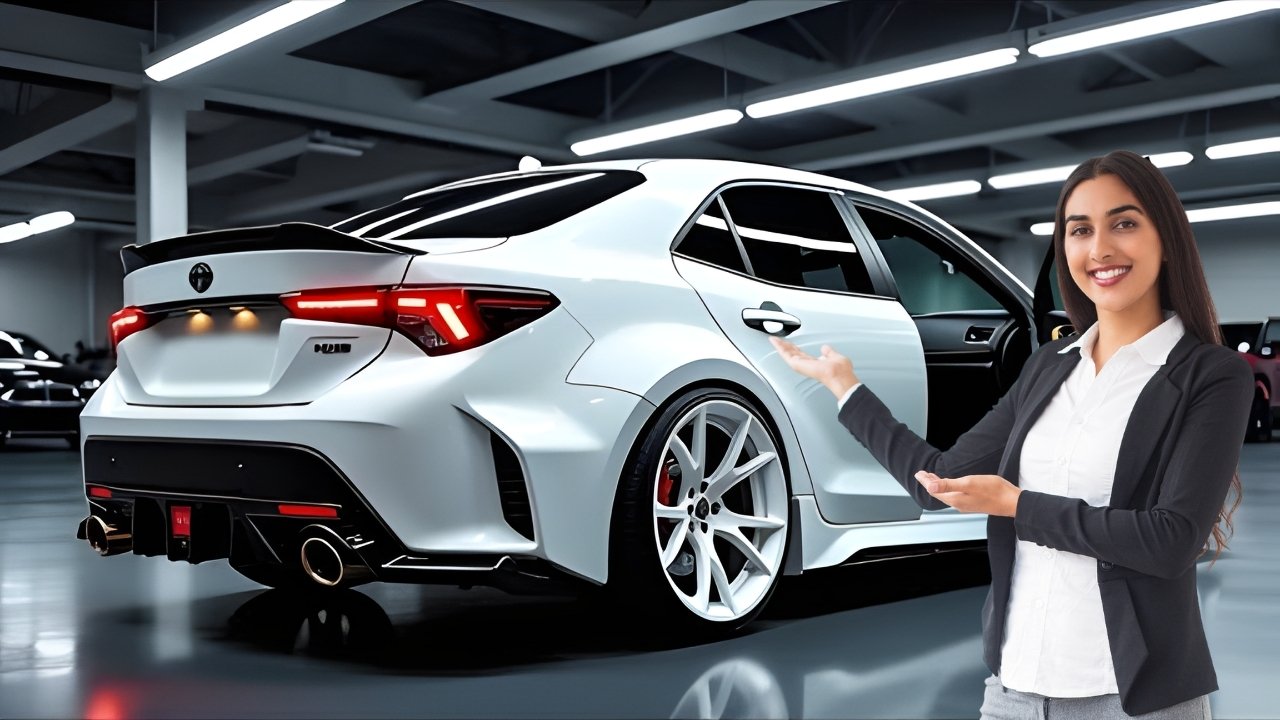
Next Gen Toyota Corolla: The automotive world awaits one of the most significant redesigns in compact car history as Toyota prepares to unveil the 13th-generation Corolla. Expected to debut in 2026 as a 2027 model year vehicle, the next-generation Toyota Corolla represents a dramatic departure from the conservative approach that characterized previous iterations. With over 50 million units sold globally since its 1966 introduction, the Corolla has earned its place as the world’s best-selling nameplate. Now, Toyota aims to reinvent this icon with aggressive styling, advanced hybrid technology, and potentially even plug-in hybrid and electric variants.
Launch Timeline and Market Availability
The 2027 Toyota Corolla is scheduled for global reveal in late 2026, with North American deliveries beginning in early 2027 as a 2027 model year vehicle. This timeline follows the typical six-to-seven-year lifecycle for Corolla generations, as the current 12th-generation model has been on sale since 2018.
Production will take place at Toyota’s established manufacturing facilities, with North American models expected to be built at the company’s Mississippi and Ontario plants. The extended development period reflects Toyota’s commitment to ensuring the new Corolla meets stricter emissions regulations while delivering improved performance and efficiency.
Expected Pricing Structure
While Toyota has not announced official pricing, industry analysts project the following price ranges based on current market positioning and anticipated feature upgrades:
Projected 2027 Corolla Pricing
| Variant | Engine Type | Estimated Starting Price |
|---|---|---|
| LE (Base) | 1.5L Hybrid | $26,000 – $27,000 |
| SE | 1.5L Hybrid | $28,000 – $29,000 |
| XLE | 1.5L Hybrid | $29,500 – $30,500 |
| XSE | 1.5L Turbo Hybrid | $31,000 – $32,000 |
| PHEV (if offered) | Plug-in Hybrid | $33,000 – $35,000 |
These projections represent a $2,000-$3,000 increase over current pricing, reflecting enhanced technology, improved materials, and inflation adjustments. The pricing strategy positions the Corolla competitively against the Honda Civic (starting at $25,200) and Hyundai Elantra (starting at $23,750) while maintaining Toyota’s value proposition.
Revolutionary Design Language
The next-generation Corolla adopts Toyota’s bold “Hammerhead” design philosophy, drawing inspiration from recent redesigns of the Prius, Camry, and C-HR. Leaked concept images and insider reports suggest a dramatically more aggressive appearance than the outgoing model.
Exterior Design Features
Front Fascia: The front end features a striking T-shaped design with boomerang LED headlamps positioned above distinctive LED daytime running lights. The parametric grille integrates seamlessly with sculpted air intakes, creating a wide, low stance that emphasizes the car’s athletic proportions.
Profile: Longer rear doors improve rear-seat access, addressing a common complaint about the current generation. The glasshouse maintains the Corolla’s characteristic silhouette while incorporating flush door handles and aerodynamic detailing to reduce drag and improve efficiency.
Rear Design: Full-width LED taillights connected by a light bar create a modern signature at night. The rear hatch sits more upright than the current model, improving cargo accessibility while maintaining the sleek coupe-like roofline.
Body Styles
Toyota plans to continue offering three distinct body configurations:
- Four-door Sedan: Primary volume seller for North American market
- Five-door Hatchback: Sportier alternative with improved cargo flexibility
- Station Wagon (Touring): Available in select global markets (not North America)
Advanced Powertrain Options
The 13th-generation Corolla introduces Toyota’s next-generation electrified powertrains, developed with improved thermal efficiency and reduced emissions.
New 1.5L Engine Family
Toyota revealed its next-generation 1.5-liter four-cylinder engine family in May 2024, designed specifically for electrification and carbon-neutral fuel compatibility.
Powertrain Specifications
| Engine Type | Configuration | Power Output | Fuel Economy (Est.) |
|---|---|---|---|
| 1.5L Naturally Aspirated | Hybrid | 128-138 HP combined | 50+ MPG combined |
| 1.5L Turbocharged | Hybrid | 178 HP combined | 45-48 MPG combined |
| 1.5L Plug-in Hybrid | PHEV | 200+ HP combined | 100+ MPGe |
| 2.0L (GR Corolla) | Turbocharged | 320-400 HP | 22-25 MPG combined |
Base Hybrid System: The standard powertrain pairs a naturally aspirated 1.5-liter four-cylinder with electric motor assistance, targeting thermal efficiency approaching 45 percent—challenging BYD’s current world record of 46.06 percent. This system prioritizes fuel economy over outright performance, ideal for commuters seeking maximum efficiency.
Turbocharged Hybrid: Higher trim levels receive a turbocharged 1.5-liter engine with electric boost, delivering 178 horsepower while maintaining impressive fuel economy. This configuration provides spirited acceleration without sacrificing the hybrid advantage.
Plug-in Hybrid (PHEV): Industry reports suggest Toyota will introduce a plug-in hybrid Corolla for the first time, offering electric-only range exceeding 50 miles. This variant positions the Corolla against the Honda Civic Hybrid and expands Toyota’s PHEV offerings beyond the RAV4 and Prius Prime.
Transmission Options
All hybrid variants utilize Toyota’s proven electronic continuously variable transmission (e-CVT), offering seamless power delivery and maximized efficiency. The system’s refinement has improved significantly, with smoother transitions between electric and gasoline power modes.
Interior Revolution
The cabin represents perhaps the most significant transformation, moving away from the current generation’s conservative approach toward a more premium, technology-focused environment.
Technology Integration
Digital Displays: Expect a standard 12.3-inch digital instrument cluster across most trims, with a central 12.3-inch touchscreen running Toyota’s latest Arene software platform. This system debuted on the 2026 RAV4, offering improved responsiveness, over-the-air updates, and enhanced smartphone integration.
Connectivity Features:
- Wireless Apple CarPlay and Android Auto (standard)
- Wireless smartphone charging pad
- Multiple USB-C ports throughout cabin
- Enhanced voice assistant with AI integration
- Cloud-based navigation with real-time traffic
- Digital owner’s manual with interactive guides
Interior Materials and Comfort
Toyota aims to elevate perceived quality through improved materials:
- Soft-touch dashboard surfaces across all trim levels
- Premium cloth or synthetic leather upholstery
- Ambient lighting with multiple color options
- Improved sound insulation for quieter cabin
- Redesigned front seats with enhanced bolstering
- Increased rear legroom (projected 1-2 inch improvement)
Storage Solutions
Practical storage receives attention with:
- Larger center console bin
- Deep door pockets sized for modern water bottles
- Rear seat pass-through for long items
- Improved trunk volume (projected 13-15 cubic feet)
Advanced Safety Systems
The 2027 Corolla debuts Toyota Safety Sense 4.0, the latest evolution of the company’s comprehensive driver assistance suite.
Safety Features
| Feature | Function | Availability |
|---|---|---|
| Pre-Collision System | Enhanced pedestrian/cyclist detection | Standard |
| Dynamic Radar Cruise Control | Full-speed range with stop-and-go | Standard |
| Lane Departure Alert | Steering assist and lane centering | Standard |
| Lane Tracing Assist | Active lane keeping | Standard |
| Road Sign Assist | Traffic sign recognition | Standard |
| Automatic High Beams | Intelligent beam management | Standard |
| Blind Spot Monitor | Side traffic detection | Standard (most trims) |
| Rear Cross-Traffic Alert | Backing collision prevention | Standard (most trims) |
| Emergency Steering Assist | Collision avoidance maneuvers | Available |
| Parking Support Brake | Low-speed collision prevention | Available |
The system’s improved cameras and radar sensors provide wider detection zones and faster response times compared to the current generation.
GR Corolla: The Performance Variant
The enthusiast-focused GR Corolla receives significant upgrades for the new generation, though exact specifications remain subject to speculation.
Performance Specifications (Projected)
Engine Options: Two competing theories exist for the next GR Corolla powerplant:
- Evolution: Refined 1.6L turbocharged three-cylinder producing 320-340 HP
- Revolution: New turbocharged 2.0L four-cylinder delivering up to 400 HP
Drivetrain: The GR-Four all-wheel-drive system continues with manual torque distribution modes (60/40, 50/50, 30/70 splits). Enhanced torque-vectoring rear differential improves cornering capability and traction management.
Transmission: The six-speed manual remains standard, with Toyota officials confirming approximately 80 percent of buyers choose the stick shift. The eight-speed automatic continues as an option for those preferring convenience without sacrificing performance.
Competitive Landscape
The 2027 Corolla enters a transformed compact car segment where several traditional competitors have exited.
Primary Competitors
| Model | Starting Price | Combined MPG | Key Advantage |
|---|---|---|---|
| Honda Civic | $25,200 | 36 MPG | Spacious interior |
| Honda Civic Hybrid | $28,000 | 50 MPG | Hybrid efficiency |
| Hyundai Elantra | $23,750 | 37 MPG | Value pricing |
| Hyundai Elantra Hybrid | $28,000 | 54 MPG | Best fuel economy |
| Mazda3 | $24,000 | 30 MPG | Driving dynamics |
With Ford and General Motors having abandoned the compact car segment, the Corolla faces fewer direct competitors but must contend with the shift toward compact crossovers like the Toyota Corolla Cross and Honda HR-V.
Platform and Chassis
The 2027 Corolla continues on the proven TNGA-C (Toyota New Global Architecture – Compact) platform, shared with the Prius, C-HR, and Corolla Cross. However, expect significant refinements:
Structural Improvements:
- Increased body rigidity for improved crash protection
- Revised suspension geometry for better ride quality
- Enhanced steering feedback and precision
- Optimized weight distribution
Suspension Tuning: Toyota’s engineers prioritize improved ride comfort without sacrificing the current model’s competent handling. Expect a softer initial impact over bumps with better body control during cornering.
Environmental Commitment
The hybrid-only strategy aligns with Toyota’s Beyond Zero vision for carbon neutrality. By eliminating traditional gasoline-only variants (except potentially the base model in select markets), Toyota positions the Corolla as an accessible entry point for electrified transportation.
Carbon Neutral Fuel Compatibility: The new engine family accepts carbon-neutral synthetic fuels, providing flexibility as the industry transitions toward full electrification.
Market Strategy and Sales Expectations
Despite declining sedan sales industry-wide, Toyota sells over 200,000 Corollas annually in the United States alone. The redesign aims to maintain this volume by:
Attracting New Buyers:
- Younger customers drawn to bold styling
- Tech-savvy consumers appreciating advanced features
- Eco-conscious drivers seeking affordable electrification
Retaining Loyal Customers:
- Proven Toyota reliability and resale value
- Comprehensive dealer network for service
- Familiar operation with evolutionary improvements
Final Verdict: Evolution Meets Revolution
The 2027 Toyota Corolla represents a calculated risk for the world’s largest automaker. By dramatically transforming the design while maintaining the core values that made the Corolla successful—reliability, efficiency, and value—Toyota aims to secure the nameplate’s relevance for another generation.
The hybrid-focused strategy acknowledges market realities while positioning the Corolla as an accessible alternative to expensive electric vehicles. With projected pricing starting around $26,000, the new Corolla maintains its role as Toyota’s entry-level offering while delivering technology and refinement previously reserved for premium models.
For buyers evaluating compact cars in 2027, the redesigned Corolla promises to deliver exceptional fuel economy, advanced safety technology, and bold styling in a package that retains the practical virtues that have defined the model for nearly six decades. Whether the automotive public embraces this transformation remains to be seen, but Toyota’s track record suggests the 13th-generation Corolla will prove as successful as its predecessors.
The wait for the official reveal continues, with enthusiasts and practical buyers alike anticipating confirmation of specifications, final pricing, and real-world performance. One certainty remains: when the 2027 Toyota Corolla arrives, it will represent one of the most significant transformations in automotive history for one of the world’s most important nameplates.